
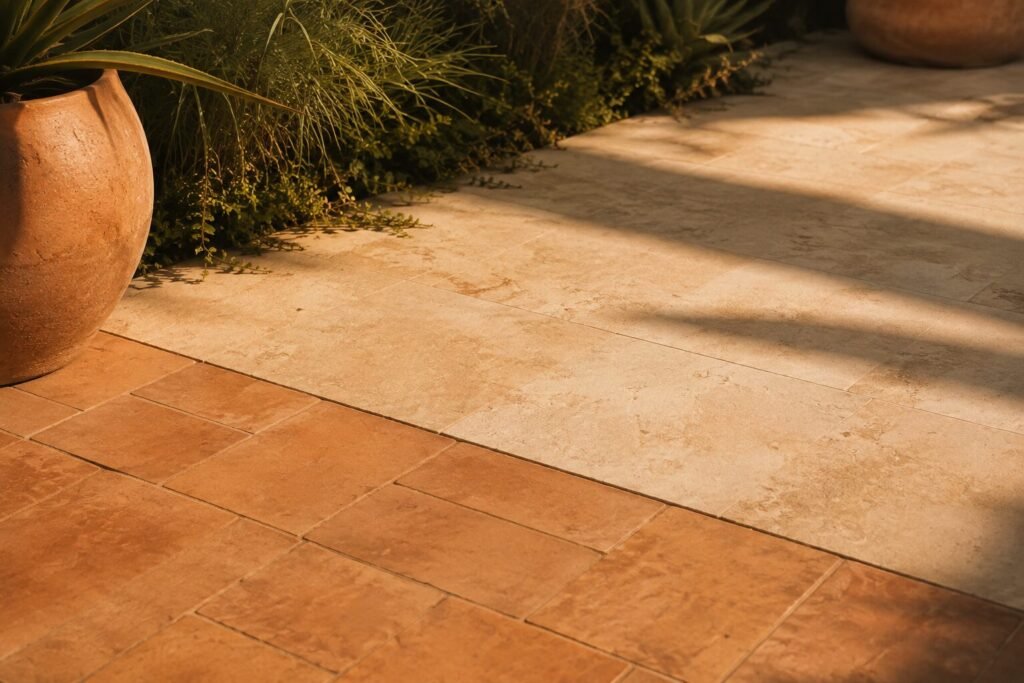
Bare feet and ten in the morning don’t mix on the wrong patio. Choose the wrong flooring here and by mid-morning your terrace is a stovetop — gorgeous in photos, unusable in person until the sun drops again. This is the decision nobody warns you about before the pergola or the pool: what you’re actually going to stand on.
The short answer, if you want it before the trade-offs: tile stays coolest underfoot and holds up to salt air, but chips at the edges over a decade and costs more if you’re importing it. Poured concrete is the cheapest and most forgiving option, but it reads as a driveway unless you spend on detailing, and it needs resealing against salt every two to three years. Natural stone — coral stone, travertine, the odd shipment of bluestone — ages better than either, developing a patina instead of just wearing out, but it costs two to three times more and only looks right if your contractor has actually laid it before, not just poured concrete with a stone veneer stuck on top. No single material wins on price, comfort and looks at once. Pick the two that matter most and make peace with the third.
Tile: cool underfoot, patient with salt
Porcelain tile is the material most people land on once they’ve stood on hot concrete in July and changed their minds. It runs cooler than concrete or dark stone because it reflects rather than absorbs, and a good porcelain body is close to impervious to salt air — no pitting, no efflorescence, decades of service if it’s laid on a proper bed rather than thin-set over bare sand, which is still how some crews here try to save a day.
The catch is supply. Most of what looks good arrives by container, not by truck, which means a six-to-ten week wait is normal and breakage in transit is not rare — order 10% over what you measure. Terracotta tile, which we’ve written about on its own, belongs in this same conversation: warmer in tone, slightly more porous, and worth it if you want the patio to read as an extension of the house rather than a slab bolted on.
Concrete: the honest workhorse
Poured concrete is the material nobody photographs and everybody has. Broom-finished, it’s the cheapest square footage on this list by a wide margin, and it’s forgiving of the coral bedrock most island lots sit on — a slab can flex slightly without cracking the way a rigid stone installation can. The trade-off is that plain grey concrete reads utilitarian fast, and salt air is not kind to it: expect resealing every two to three years, and a hairline crack network by year eight or nine if it wasn’t cut with proper control joints.
The fix isn’t a different material, it’s better detailing — integral color, a broom or salt finish instead of trowel-smooth, scored lines at a scale that suggests pavers rather than a parking lot. Done well, concrete disappears into the design instead of announcing the budget.
Natural stone: the one that ages instead of wearing out
Coral stone, when you can source it locally, is the closest thing to a material built for this climate — it’s already been living in salt for millennia. Imported travertine and bluestone get you a similar look with more consistent supply, at a real cost premium. What you’re paying for isn’t just the stone; it’s a patina that improves for twenty years instead of a finish that degrades for ten.
The risk isn’t the material, it’s the installer. Stone wants a mason who has set it before — proper joints, correct sealant, drainage that accounts for how differently stone and grout expand in heat. This is exactly the contractor-vetting problem we’ve covered before, and it matters more with stone than with any other flooring on this list, because a bad stone installation is expensive to rip out and start over.
What the wind and the sun actually decide for you
None of this happens in isolation from what’s above the patio. A pergola or a shade sail changes the flooring math entirely — shaded tile barely warms up, while unshaded dark stone can be too hot to cross barefoot by nine. If you haven’t settled the shade question yet, that decision should come before the flooring one, not after. And if trade winds move through your site the way they do across most of this coast, flooring texture matters too: a honed or bush-hammered finish holds up underfoot in a stiff breeze full of grit in a way a polished surface doesn’t.
The iguana has an opinion here, mostly formed from experience: he will always choose the shaded tile over the sunny stone, cold drink in hand, no negotiation. Comfort, he’d say, is the only real luxury upgrade.
Frequently asked
Does tile or concrete last longer in salt air?
Properly laid porcelain tile generally outlasts plain concrete in salt exposure — concrete needs resealing every two to three years to match tile’s low-maintenance lifespan.
Is natural stone worth the extra cost for a Caribbean-style patio?
If you’re staying long-term, yes — stone develops a patina that improves with age instead of wearing down, but only if it’s installed by someone experienced with stone specifically, not just concrete or tile.
How do I stop patio flooring from getting too hot to walk on?
Choose lighter-colored materials, add shade with a pergola or sail before the sun hits peak hours, and favor textured over polished finishes, which reflect and hold less heat.
In one line
There’s no perfect patio floor — only the trade-off between cost, comfort and how long you’re willing to wait for it to look like it belongs.
Garden Design Co. — Ideas, spaces and objects that elevate outdoor living.