
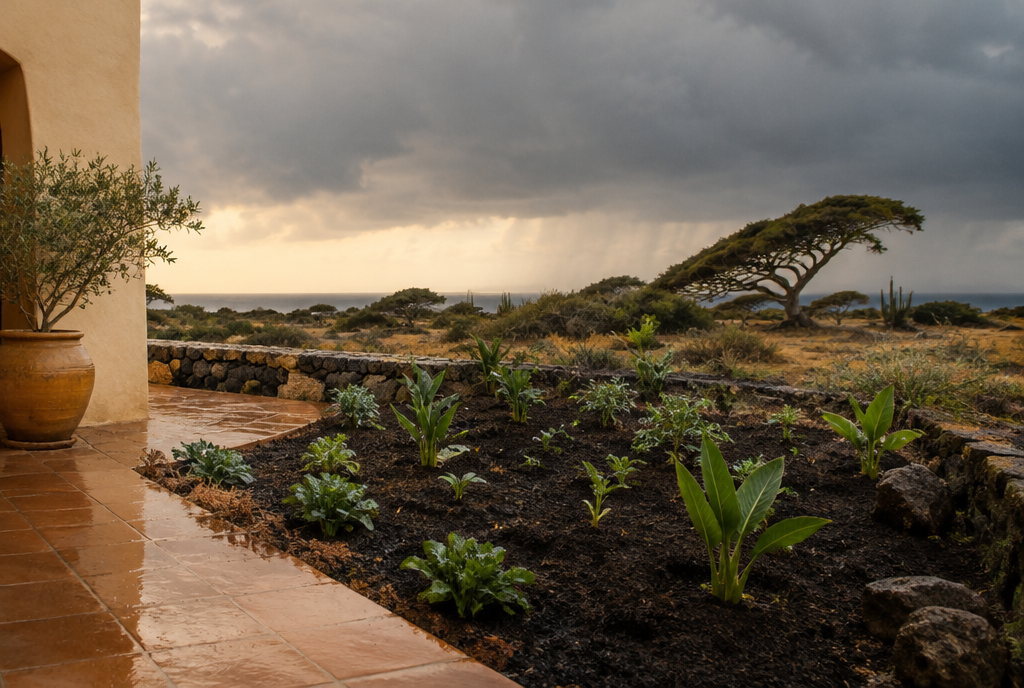
Most people in the ABC islands plant when they feel like it. A free Saturday, a new house, a nursery sale. The plants go in during the driest, windiest stretch of the year, and by March half of them look like they regret the decision.
Here is the answer: the best time to plant in Aruba, Curaçao and Bonaire is the rainy season, roughly October through January. Rain is thin here, but it is the only moment the soil, the sky and the plant are all on your side. Planted now, a shrub or tree gets weeks of free water and cooler nights to root in. Planted in April, it spends its first months fighting sun, trade wind and your irrigation bill.
The rains are short, so use them
The ABC islands are arid. Most of the year’s rain falls in a handful of grey weeks late in the year, often in sudden downpours that run off the coral soil faster than they soak in. That is exactly why the window matters. Everything planted in those weeks has a chance to push roots out before the long dry season begins.
Roots are the whole game. A plant that spends its first dry season establishing a deep root system will cope with almost anything afterward. A plant that spends it surviving on a hose never really gets there, and stays dependent on you indefinitely.
What to plant now, and what to wait on
Trees, shrubs and anything woody should go in first. Watapana, kibrahacha, sea grape, and the hardy cacti and agaves all benefit from establishing before the dry months. If you are working from our guide to native and imported plants, this is when the native list earns its keep: they use the rain best because they evolved around it.
Imported tropicals are the exception. A palm or flowering shrub shipped in from Florida or the Netherlands is already stressed, and it still needs a proper hole, amended soil and a drip line even in a wet week. It can be planted now, just not carelessly. Soft, broad-leafed plants such as ferns and calatheas, the kind that struggle on an exposed wall in the trade wind, are best held back until you have a sheltered spot ready for them.
Prepare the ground before the rain, not during it
Coral soil drains almost instantly and holds little organic matter, so planting day matters more than people think. Dig the hole wider than the root ball, mix in compost or good imported planting soil, and finish with a ring of mulch to slow evaporation. A shallow basin around the trunk catches rain and holds it where the roots can reach it, instead of letting it run to the street.
If you are building the kind of garden described in our low-maintenance garden piece, this is the one stretch of the year where the effort is front-loaded. Do the work now and the rest of the year is genuinely easy.
The honest trade-offs
The rainy season is not a guarantee. Some years it arrives late, thin or not at all, and a newly planted tree still needs deep watering every week or two for its first few months. Planting in the window lowers your risk. It does not remove it.
There is also a supply problem. Everyone has the same idea at the same moment, and local nurseries run short of the popular native trees. Ordering early, or asking a nursery what is arriving in the next shipment, saves you from settling for whatever is left. Imported stock arriving on a delayed container can miss the window entirely.
St. Maarten, Saba and St. Eustatius are a different story. Wetter and greener, they rain across more of the year and have a hurricane season to plan around, so the calendar there is looser and the risks are different. Everything above is written for the dry ABC islands.
Our iguana, for the record, plants nothing and waits for the first proper rain before leaving the shade. It is the only gardening schedule he has ever needed.
Frequently asked questions
When is the best time to plant in Aruba?
During the rainy season, roughly October to January. Rain and cooler nights give new roots a head start before the long dry season.
Can I plant in the dry season in Curaçao or Bonaire?
Yes, with a drip line on a timer and shade for young plants. It costs more water and more attention, so plant hardy natives rather than delicate imports.
Does the same planting calendar apply in St. Maarten?
Not really. St. Maarten, Saba and St. Eustatius get more rain across the year, so the window is wider and the main risk is hurricane season rather than drought.
In one line
Plant when the rain does half the work: October to January, natives first, with the soil prepared before the first downpour.
Garden Design Co. — Ideas, spaces and objects that elevate outdoor living.