
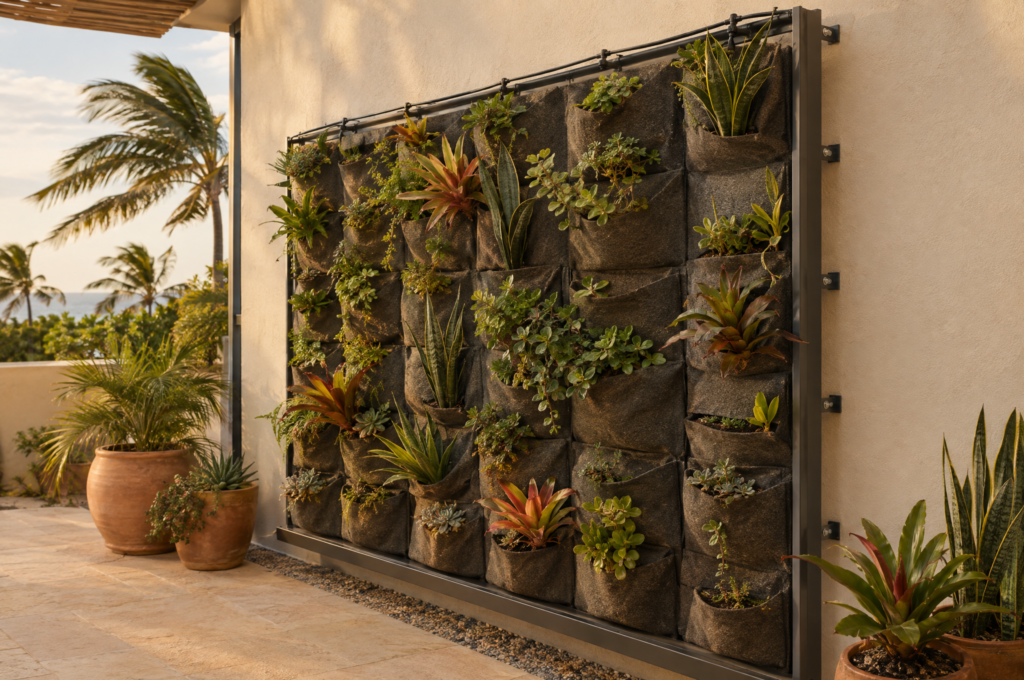
A vertical garden photographs beautifully. A wall of ferns and pothos, dense and green, no soil bed in sight — it is the single most-saved image in every “small space garden” folder on Pinterest.
It is also, in the Dutch Caribbean, one of the more misunderstood installations we get asked about. Not because it cannot work here. Because most of what is published about vertical gardens was written for a temperate courtyard in Barcelona or Los Angeles, not a walled patio catching trade wind and salt air.
The appeal is real
Ground space is the scarcest thing in a townhouse courtyard or a condo terrace. A vertical garden turns a bare block wall — usually the hottest, least useful surface on the property — into the most alive thing in the space. It cools the wall behind it, muffles sound from a neighboring unit, and does in one gesture what would otherwise take a dozen potted plants and still look cluttered.
Used well, it is also a privacy screen that never feels like a fence.
The three things the Pinterest photo does not show you
1. Irrigation is not optional, it is the entire system
A vertical garden has almost no soil mass per plant compared with a bed or a large pot. That soil dries out in hours in direct island sun, not days. Every functioning vertical garden we have seen here runs on drip irrigation with a timer, full stop — hand-watering a wall twice a day is not a maintenance plan, it is a part-time job you did not sign up for. Budget for the irrigation system before you budget for the plants.
2. Wind exposure decides your plant list, not aesthetics
A wall that catches direct trade wind will shred the soft, broad-leafed plants that make vertical gardens look lush in photos — pothos, ferns, calatheas. They want still, humid air. If your wall is exposed, you are choosing from a shorter, tougher list: bromeliads, succulents, dwarf agave, some of the tougher philodendrons. A wind-exposed wall planted with fern-garden dreams looks perfect for three weeks and ragged by month two.
Walk your wall at different times of day before you plant it. A courtyard that blocks wind at ground level often still funnels it at head height along a wall — that is where the damage happens.
3. Salt air shortens the hardware’s life, not just the plants’
The felt-pocket systems popular in mainland installations degrade fast within a few miles of the coast. For here, a modular plastic or powder-coated aluminum cell system holds up considerably longer than fabric, and stainless irrigation fittings are worth the extra cost over standard steel — regular steel hardware on an exposed wall is rusted through in a year.
Where it earns its place
The best candidates we see are sheltered walls: a courtyard corner with buildings or a pergola breaking the wind, a covered outdoor kitchen wall, an entry passage. Sheltered exposure is what lets you plant the lush, photogenic species the format is famous for. On those walls, a vertical garden genuinely outperforms every other option for the square footage.
On a fully exposed perimeter wall catching wind straight off the water, we usually steer clients toward a simpler answer: espaliered or trellised plants rooted in ground soil, which tolerate wind far better because they are not relying on a thin pocket of substrate to hold moisture.
Our iguana’s take
He has strong opinions about walls that used to be a place to nap in the sun and are now, apparently, “a living ecosystem.” He will allow it, on the condition that the irrigation system does not drip on his preferred ledge.
In one line
Vertical gardens are honest, high-reward installations for sheltered walls with real irrigation budgets — not a decoration for a wind-exposed one.
Garden Design Co. — Ideas, spaces and objects that elevate outdoor living.