

The first fire pit we set up on a terrace in Noord lasted four evenings before the trade wind found it. Not the fire — the pit itself, a thin painted-steel bowl shipped in from a big-box importer, rusted clean through at the base by October. Salt air does that. It does it faster than anyone selling fire features from a catalogue in Ohio will ever tell you.
So here is the answer, up front: in a steady trade wind with salt in the air, a deep stainless or thick cast-iron fire bowl on a solid base beats a decorative fire pit, and both beat a clay chiminea, almost every time. The reasons are worth knowing before you spend the money, because the trade-offs aren’t the same ones you’d weigh in a climate that doesn’t blow twenty knots most afternoons.
The wind problem nobody mentions
Most fire feature marketing is written for still air. A photogenic spread showing flames rising in a clean vertical column assumes a yard where the air barely moves. Aruba, Curaçao, most of the Caribbean coast — that’s not the deal we get. Trade winds are constant, not occasional, and they do three things to a fire feature that catalogue copy never covers: they push flame and sparks sideways toward furniture and dry planting, they pull heat away faster than the fuel can replace it, and they accelerate corrosion on anything that isn’t genuinely marine-grade. A fire pit that’s rated “outdoor” for a Midwestern patio is not rated for this.
Fire pits: the open question
A classic open fire pit — steel or cast bowl, no walls to speak of, wood or gas — is the cheapest option and the one most people arrive wanting. In a sheltered courtyard with walls or dense planting breaking the wind, it works beautifully. On an open terrace facing the trade winds, it’s a liability: sparks travel further than you’d guess, and gas versions with open burners can misfire or blow out in a gust. If your site is genuinely wind-protected, this is still the most atmospheric option. If it isn’t, skip it.
Fire bowls: built for the gusts we actually get
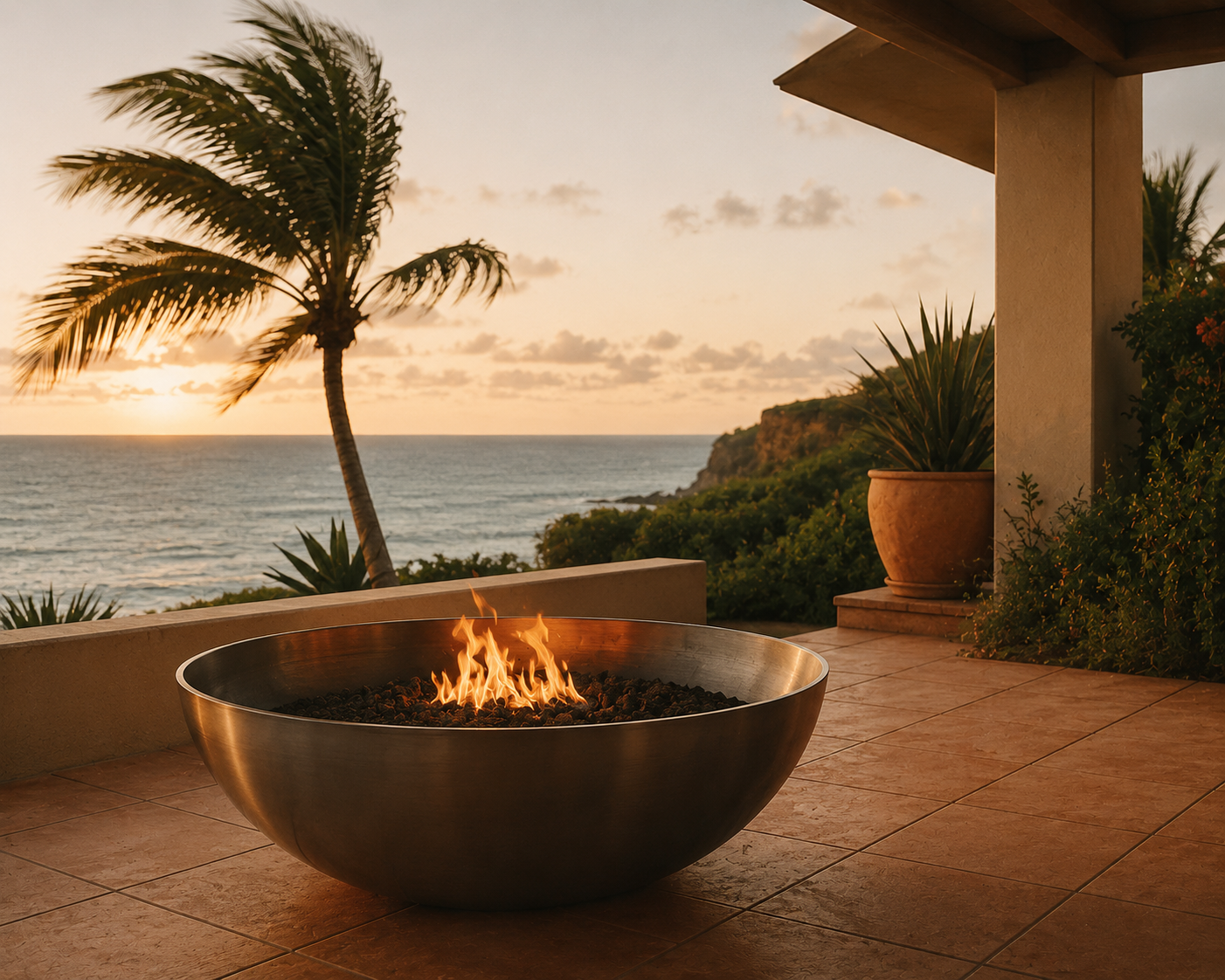
A deep fire bowl — sides high enough to shield the flame, usually 30–40cm of rise before the rim — is the option that actually respects the climate. The depth breaks the wind before it reaches the fire, which means steadier flame, fewer sparks in flight, and less heat stolen straight off the top. Stainless steel or thick cast iron holds up to salt air far longer than painted steel, which is worth paying for even though the upfront cost is higher — we’ve seen the cheap painted version fail within a single wet season here. Gas versions with a wind guard around the burner are the most reliable for a coastal terrace; wood-burning bowls work too, but expect to go through fuel faster than the spec sheet suggests, because the wind is doing some of the burning for you.
Chimineas: charming, almost always wrong here
Chimineas earn their keep in a still, dry climate — the clay body radiates heat slowly and the narrow chimney draws smoke up and away. In a trade wind, that same chimney becomes a wind tunnel: gusts down the flue destabilise the fire, and clay chimineas imported from Mexico or Spain simply aren’t built for humidity swings between a wet season and constant salt exposure. We’ve watched hairline cracks turn into full splits in under two years. If you love the look, a cast-iron chiminea will survive longer than clay, but on an open terrace it’s still fighting the wind rather than working with it. This is the one fire feature we’d steer most readers here away from, gently.
What actually holds up
Material first: 304 stainless or thick cast iron, not painted mild steel — the paint is the first thing salt air removes, and rust follows within a season.
Base second: a fire feature needs enough weight or a wide enough footprint that a gust doesn’t walk it across the tiles, which happens more often than anyone admits.
Fuel third: gas is more wind-stable and more predictable in a coastal breeze; wood is more atmospheric but burns faster and needs more tending when the wind picks up in the evening, which around here it reliably does.
None of this is about spending more for its own sake — it’s about the difference between a fire feature that’s still working next year and one that’s a rust stain on the tile by March.
The same logic that shaped Shade Sails vs. Pergolas: What Survives Trade Winds applies here: anything you put on an open terrace in this climate has to be chosen for the wind it will actually meet, not the wind in the product photo. If your fire feature sits under a pergola, keep real clearance above it — heat rises faster than people expect and framing timber doesn’t forgive it. And if you’re still deciding whether your terrace can be used at all in the evening breeze, start with Wind Is Why You Don’t Use Your Patio before you buy anything that burns.
A local iguana, watching all this from the wall with a drink he did not pay import duty on, has one observation: humans will debate fire bowl gauge thickness for a week and then leave the cover off during rainy season anyway. He doesn’t judge. He just moves to drier rock.
In one line
Buy for the wind you actually have — deep bowl, marine-grade metal, solid base — and skip the chiminea unless your terrace is genuinely sheltered.
FAQ
Do gas fire pits work in windy coastal climates?
Yes, if the burner has a wind guard and the bowl has enough depth to shield the flame — open, shallow gas pits struggle most in steady trade winds.
Why do fire pits rust so fast near the ocean?
Salt air accelerates corrosion on painted or mild steel far faster than inland climates; stainless steel or thick cast iron holds up substantially longer.
Are chimineas a bad choice for a windy patio?
Generally yes — the chimney design that helps in still, dry climates becomes a wind tunnel in steady trade winds, and clay bodies crack faster under humidity swings and salt exposure.
Garden Design Co. — Ideas, spaces and objects that elevate outdoor living.