
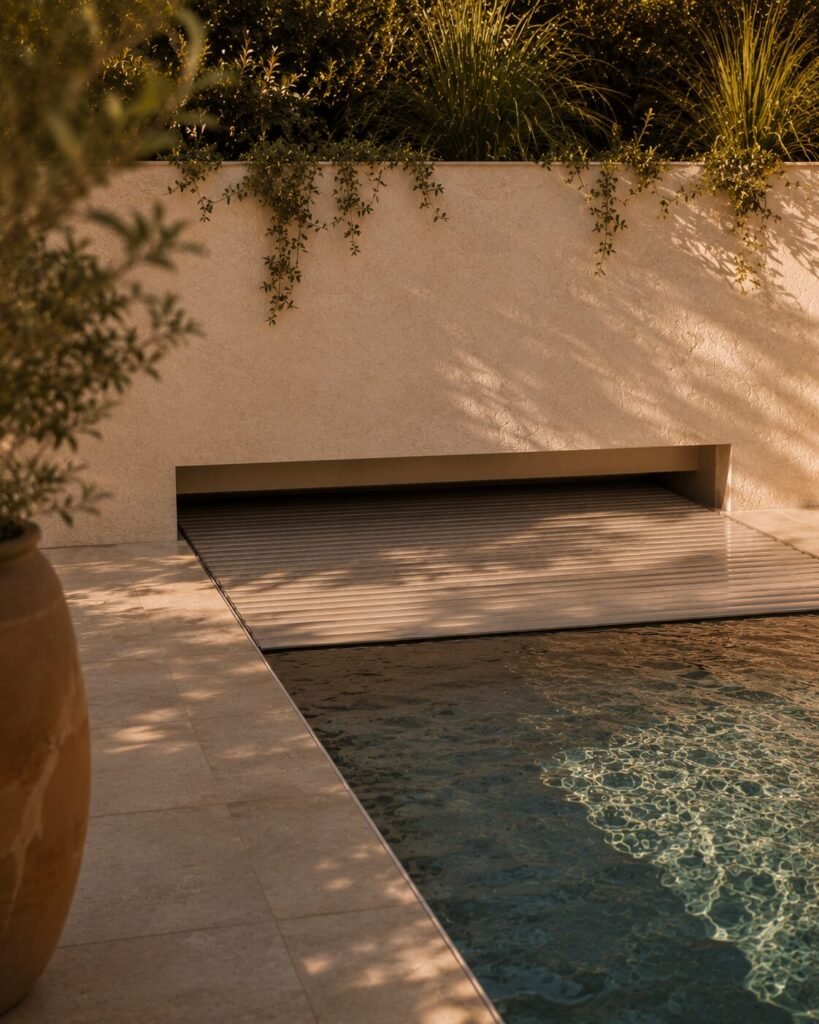
Nobody on this island covers their pool for privacy. They cover it because the sun here doesn’t take a break, and neither does the wind carrying sand, palm debris, and whatever the neighbor’s garden decided to shed this week. A pool left open through a dry-season month picks up more grit than most owners think possible, and every bit of it means more chlorine, more filter runs, more of a chemical bill that already costs more here than it should.
Short answer, up front: a pool cover pays for itself here faster than almost anywhere — mostly through evaporation control and debris, not looks. Which cover depends on how much you’re willing to wrestle with day to day.
The real cost isn’t the cover, it’s what happens without one
We’ve written about why small pools are the big idea for exactly this reason — less surface area means less evaporation, less sun exposure, less to manage. But even a small pool left uncovered in constant sun and wind loses a startling amount of water to evaporation every week, and every inch you top off is desalinated or trucked water, not free rain. Add the salt air pulling minerals out of anything metal near the pool, and the case for a cover stops being about tidiness and starts being about the water bill.
Algae is the other half of it. If you’ve read the quiet secret to an algae-free pool, you know the fight is really about sunlight and organic debris feeding growth faster than chlorine can keep up. A cover blocks both. It’s not a substitute for a proper maintenance routine, but it buys real margin — fewer shock treatments, less scrubbing on a Saturday morning.
Solid vs. mesh vs. solar — the honest trade-offs
Solid vinyl covers block everything — sun, debris, evaporation — and they’re the best choice if the pool sits below a tree line or near enough to the road to catch dust. The trade-off is weight and heat: solid covers trap warmth underneath, which sounds nice until you’re dealing with algae bloom from a pool that’s now warmer than it used to be. They also need somewhere dry to live when they’re off, which in a humid climate means mildew if you’re not careful.
Mesh covers let rain through and are far lighter to handle solo, which matters if you’re the one pulling it on and off. They don’t block evaporation as well as solid vinyl, so the water-saving case is weaker. What they do well is debris and sun — genuinely useful if wind-blown leaves are your bigger problem than water loss.
Solar covers — the bubble-style ones — are the cheapest and do double duty warming the water, which is rarely what anyone here actually wants. They degrade fast under constant UV, usually within a season or two, and importing replacements adds up. We’d skip these unless the pool is shaded most of the day.
What actually holds up on-island
The pattern we keep seeing with local installers: solid covers on custom shapes get made-to-order, which means a wait and a real cost, while mesh covers ship in standard sizes and clear customs faster. If your pool is a standard rectangle, that alone can tip the decision. Ask any contractor who’s installed covers here for a few years and they’ll tell you the same thing — buy the reel system too. Dragging a wet cover across pool coping by hand is how grommets tear and covers get retired early.
Our iguana does not use a pool cover personally — he prefers the pool exactly as exposed as he is — but he has strong opinions about people who leave theirs bunched in a corner all season. Roll it properly or don’t bother, he says, then goes back to his drink.
FAQ
Do pool covers actually save water in a hot, windy climate?
Yes — evaporation is usually the single biggest source of water loss in an outdoor pool here, and a cover cuts it substantially, which matters most where water is desalinated or trucked in.
Which pool cover is best for salt air and constant wind?
Solid vinyl blocks the most debris and sun but traps heat; mesh handles wind and rain better with less evaporation control. Most owners here end up choosing based on whether debris or water loss is the bigger problem.
How long do solar pool covers last in constant sun?
Typically just a season or two before the material degrades under constant UV exposure, which makes them a weaker long-term choice than mesh or solid options despite the lower upfront cost.
In one line
The right pool cover here isn’t the prettiest one — it’s the one that survives the wind and actually gets used.
Garden Design Co. — Ideas, spaces and objects that elevate outdoor living.